

Dianyang Advances Mobile Thermal Imaging as a Top Mobile Phone Thermal Imager Manufanturer In China
Expanding Access to Portable Thermal Imaging
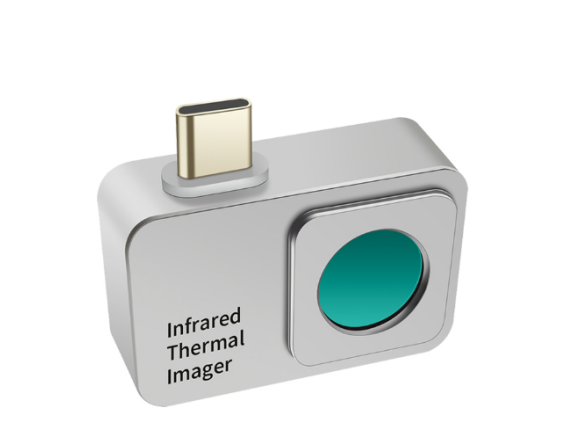
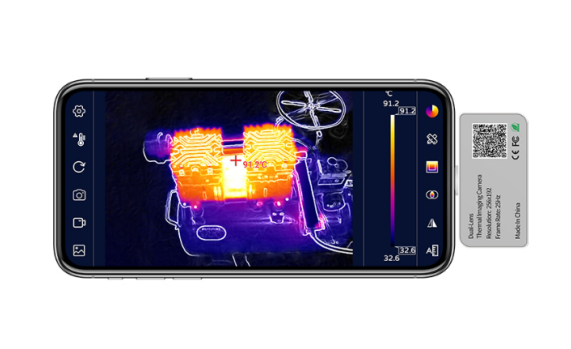
Thermal imaging has traditionally been associated with dedicated inspection instruments, but smartphone-connected cameras have created another route for portable temperature observation. By combining a compact infrared imaging device with the processing and display capabilities of a smartphone, mobile thermal imagers can support field inspections without requiring users to carry a larger standalone instrument.
Dianyang’s product portfolio includes smartphone thermal imagers alongside handheld thermal imagers, PCBA thermal imaging analyzers, outdoor sighting telescopes, and thermal imaging modules. This broader portfolio allows the company to address different levels of thermal inspection, from portable field checks to more specialized industrial and analytical applications.
The company’s mobile phone thermal imaging products are designed around practical inspection scenarios. For example, the H1FB is a compact smartphone-connected infrared thermal imager with a 160 × 120 infrared detector. It supports multiple image palettes and functions such as temperature alerts, video recording, and area measurement through its application interface. The H2FB provides a 256 × 192 infrared resolution and is positioned for applications including home repair, outdoor search and rescue, and equipment maintenance.
These functions reflect a wider shift in thermal imaging: users increasingly need tools that can be carried easily, connected quickly, and applied directly to routine inspection tasks.
Product Design Focused on Practical Inspection
For mobile thermal imaging, portability alone does not determine usefulness. Users also need thermal information that can be interpreted efficiently. Dianyang’s smartphone-connected devices incorporate functions intended to support temperature observation and basic analysis.
The H1FB, for example, supports different color palettes for highlighting thermal patterns. Certain palettes can emphasize high-temperature areas, while others help visualize temperature gradients or low-temperature conditions. Such features can assist users in identifying abnormal heat distribution during electrical maintenance, circuit board inspection, equipment checks, and building-related observations.
The H2FB similarly combines compact construction with plug-and-play smartphone connectivity. Its functions include high-temperature area detection and offline analysis of point, line, and rectangular regions. This type of functionality can make a mobile thermal camera useful beyond simple image capture, particularly when users need to examine localized temperature differences during maintenance or troubleshooting.
At the same time, mobile thermal imaging remains part of a larger technical ecosystem. More demanding inspection environments may require higher-resolution handheld systems or dedicated thermal analysis equipment. Dianyang therefore maintains several product categories rather than positioning smartphone-connected cameras as a universal replacement for professional thermal instruments.
Engineering and OEM/ODM Capabilities
For businesses developing their own thermal imaging products, hardware performance is only one part of the procurement process. Product development may also involve mechanical design, electronics, firmware, applications, testing, certification, and production scaling.
Dianyang operates as an ODM/OEM provider for infrared thermal imaging solutions. Its engineering team uses Design for Manufacturing, Design for Testability, thermal simulation, and EMC pre-compliance analysis during development. The company also provides customization covering housing and industrial design, PCB and hardware development, firmware, applications and PC software, branding, packaging, user interfaces, and specialized algorithms.
This integrated approach is particularly relevant to mobile thermal imaging because smartphone-connected products often require coordination between the infrared sensor, electronic hardware, connector, application software, and user interface. Dianyang’s service structure allows these elements to be considered as part of one development project rather than as isolated components.
The company also provides technical documentation, SDK/API resources, integration guidance, sample testing reports, and evaluation samples. During production, project managers and engineers support communication between development and manufacturing teams, while quality processes include incoming testing, calibration, NUC testing, aging tests, and final inspection.
Manufacturing and Quality Management
Dianyang’s manufacturing capabilities form another part of its approach to thermal imaging development. The company states that its facility operates under ISO 9001, ISO 14001, ISO 45001, and ISO/IEC 27001 certifications. Manufacturing capabilities include mold making, CNC machining, SMT assembly, and optical alignment, supporting prototyping, small-batch trials, and larger-scale production.
The company is also a subsidiary of VHD, a publicly listed company on the Shenzhen Stock Exchange. According to Dianyang, this relationship provides access to VHD’s R&D platforms, production systems, and quality-management resources.
For international OEM and ODM projects, compliance is another consideration. Dianyang supports customers with certification requirements including CE, FCC, RoHS, REACH, CB, UKCA, KC, and PSE. Such support can simplify the technical and documentation work involved in preparing thermal imaging products for different markets.
Applications Across Multiple Industries
The demand for thermal imaging extends across industries because temperature patterns can provide information that conventional visual inspection cannot easily reveal. Dianyang identifies power inspection, building diagnostics, firefighting, industrial maintenance, and outdoor applications among the areas served by its thermal imaging solutions.
In electrical and industrial maintenance, thermal imaging can help locate abnormal heat concentrations associated with equipment or connections. In construction and building diagnostics, infrared imaging can help visualize temperature differences related to insulation conditions, moisture-related problems, or air leakage. Compact smartphone-connected devices can be useful when inspections are carried out frequently or in locations where carrying larger equipment is inconvenient.
Dianyang’s broader product range also supports more specialized applications. Its handheld thermal imagers are designed for professional diagnostics, while its thermal analyzers address laboratory and analytical requirements. This product diversification allows different inspection scenarios to be approached according to their technical requirements rather than relying on a single device category.
A Broader Role in Mobile Thermal Imaging
The development of smartphone-connected thermal imaging reflects a broader movement toward more portable and accessible inspection technologies. For many users, the value of a thermal camera depends not only on infrared resolution but also on ease of deployment, measurement functions, software compatibility, customization options, and support throughout the product lifecycle.
Dianyang combines smartphone thermal imagers with handheld systems, thermal analyzers, modules, and outdoor imaging products while maintaining an OEM/ODM-oriented development model. Its engineering resources, manufacturing capabilities, quality systems, certification support, and after-sales services provide a framework for developing thermal imaging products for different markets and application requirements.
As mobile thermal imaging continues to move into more routine inspection and maintenance scenarios, the ability to connect infrared sensing with practical software, compact hardware, and application-specific development is likely to remain an important consideration for manufacturers and technology buyers. Dianyang’s continued focus on these areas places smartphone-connected thermal imaging within a wider portfolio of infrared solutions rather than treating it as a standalone product category.
More information about Dianyang’s smartphone thermal imagers, infrared imaging solutions, OEM/ODM capabilities, and service support is available through the official website: https://www.dytinfrared.com/
Shenzhen Dianyang Technology Co., Ltd.
Shenzhen Dianyang Technology Co., Ltd.
email us here
Legal Disclaimer:
EIN Presswire provides this news content "as is" without warranty of any kind. We do not accept any responsibility or liability for the accuracy, content, images, videos, licenses, completeness, legality, or reliability of the information contained in this article. If you have any complaints or copyright issues related to this article, kindly contact the author above.
